
The idea of using stem cells to treat hair loss has been circulating since the early 2000s, but direct stem cell transplantation faces regulatory, safety, and practical obstacles that have kept it in the research stage. A more tractable approach has quietly been building its own evidence base: conditioned medium therapy, which delivers the bioactive signals of stem cells without the cells themselves.
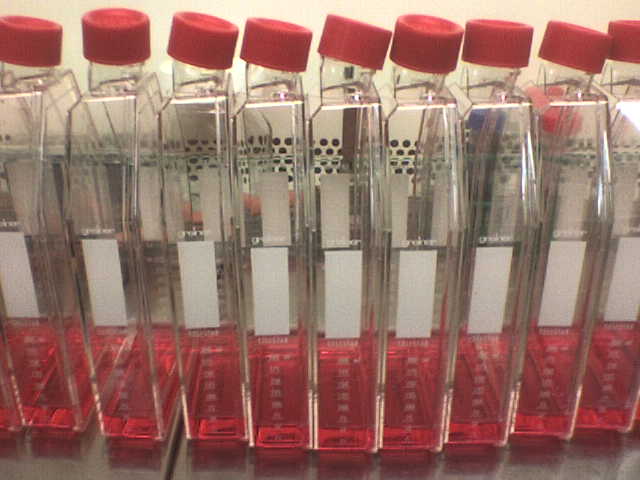
The mechanism starts with the observation that stem cells don't act only through direct differentiation, much of their therapeutic effect comes from the paracrine signals they secrete: growth factors, cytokines, exosomes, and other extracellular vesicles that influence surrounding cells. Conditioned medium is the liquid in which stem cells have been grown for a period, then removed. It contains this secretome in concentrated form. When applied to hair follicles, the growth factors and signalling molecules it contains act on dermal papilla cells in much the same way the stem cells themselves would.

The most clinically advanced formulation uses adipose-derived stem cells (ADSCs), stem cells extracted from adipose (fat) tissue. ADSC conditioned medium is rich in VEGF, HGF, KGF, PDGF, and IGF-1, all growth factors with established roles in follicle proliferation and anagen extension. A 2022 Korean study published in Stem Cells Translational Medicine was the first adequately powered randomised trial of ADSC conditioned medium for androgenetic alopecia, enrolling 60 patients who received either three monthly injections of ADSC conditioned medium or placebo. At 6 months: 11.5 additional hairs per cm² in the treated group versus 2.8 in placebo, a significant difference with a respectable effect size.

The 2024 follow-up study from the same Seoul National University group extended follow-up to 12 months and added a comparison arm of PRP. The conditioned medium arm outperformed PRP at both 6 months (11.5 vs 8.9 additional hairs/cm²) and 12 months (9.8 vs 5.4 additional hairs/cm², indicating somewhat better durability). Both outperformed placebo. The results haven't been replicated by independent groups yet, a critical limitation, but the mechanistic basis is sound and the trial quality is adequate.

The regulatory situation is complicated. ADSC conditioned medium is classified differently across jurisdictions. In South Korea, where most of the research has been done, it can be used in clinical practice under a tissue engineering framework. In the EU, it likely requires marketing authorisation as a biological medicinal product. In the US, the FDA's position depends on how the product is manufactured, if the same facility makes and uses it for the same patients (autologous, same-day), different rules apply than if it's manufactured off-site and shipped. Several US dermatology groups are navigating this landscape, but commercial availability in the US is not imminent.
The exosome subfield, which focuses specifically on the extracellular vesicle fraction of conditioned medium, is advancing rapidly and may ultimately prove more clinically tractable than whole conditioned medium, because exosomes can be standardised, characterised, and quality-controlled in ways that complex biological mixtures cannot. Exosome-based products for hair loss have entered Phase 2 trials in the US, with results expected in 2026–2027. This is one of the cleaner near-term shots at a regulated, scalable biological treatment for androgenetic alopecia.

Discussion (2)
Marcus T.
3 months ago
The conditioned medium vs PRP comparison is really useful. If conditioned medium consistently outperforms PRP across independent trials it would essentially replace PRP as the preferred biological injection.
Priya S.
3 months ago
The regulatory complexity in the US is frustrating. South Korean patients have access to clinical-grade treatments that US patients can only get in research settings.
Join the discussion
Free account. Read, like, save, and comment on every article.