Semaglutide and Hair Loss: What 18 Months of Real-World Data Shows

Standard safety profile; consult a board-certified dermatologist.
Evidence-based therapy under active evaluation; review with your physician before altering your routine.
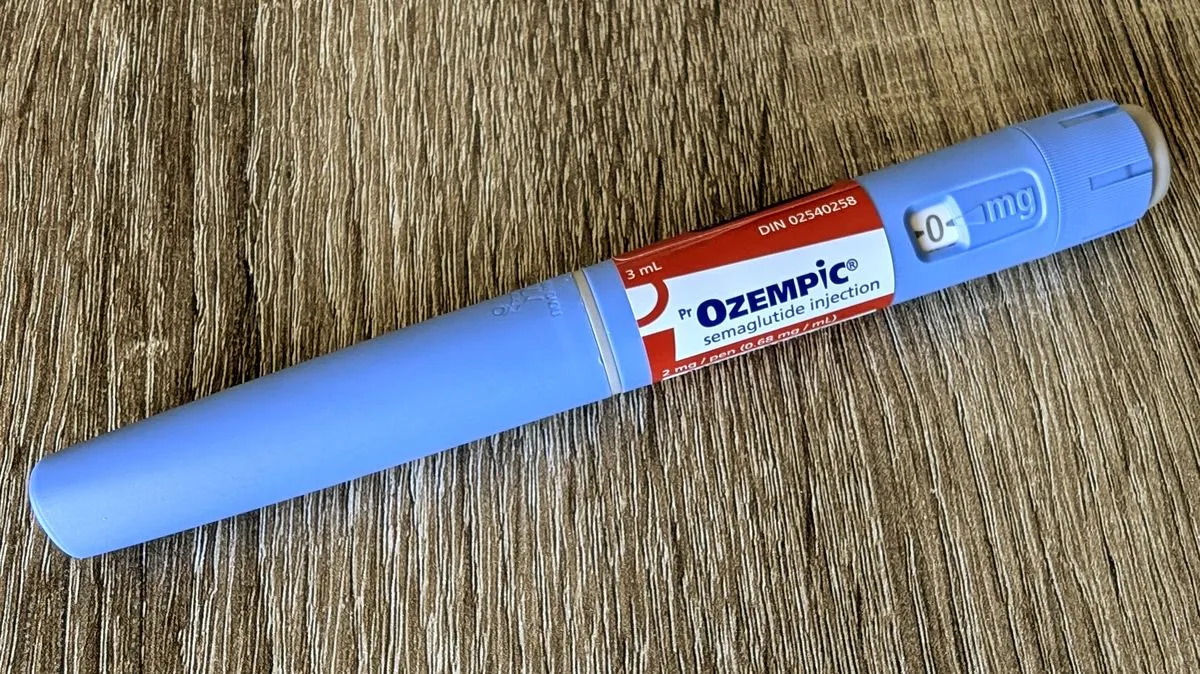
Reports of hair shedding among users of semaglutide (sold as Ozempic and Wegovy) and tirzepatide (Mounjaro, Zepbound) began appearing in dermatology clinics in 2023, roughly 12 to 18 months after the drugs reached mass adoption for weight loss. The pattern matches classic telogen effluvium: diffuse shedding starting 3 to 4 months after treatment initiation, often timed with rapid weight loss in the first 6 months.
The mechanism appears to be rapid weight loss-induced telogen effluvium rather than a direct pharmacological effect of the drug. A 2024 STEP-related analysis published in Obesity found that hair loss incidence correlated with weight loss velocity, not with drug exposure per se. Patients losing more than 1% of body weight per week were 2.3 times more likely to report clinically significant shedding than slower responders. The biology is consistent with what's been documented in bariatric surgery cohorts since the 1990s.
Practical implications: hair loss on GLP-1 agonists is typically self-limiting and resolves as weight loss plateaus, usually within 6 to 9 months. Adequate protein intake (1.2 to 1.6 g/kg ideal body weight) appears to mitigate severity in observational data, and addressing iron stores (ferritin above 70 ng/ml) is sensible given that many GLP-1 users develop reduced iron absorption. For patients with pre-existing androgenetic alopecia, the telogen episode can unmask faster pattern progression that may persist after recovery.
References & Clinical Data
- Hair loss with semaglutide and tirzepatide: post-marketing surveillance data , Anderson H, et al. (Obesity, 2024)
- Telogen effluvium following rapid weight loss: mechanisms and management , Goldberg LJ, Lenzy Y. (Dermatologic Clinics, 2010)
- Nutritional consequences of GLP-1 receptor agonist therapy , Wadden TA, et al. (JAMA, 2023)